
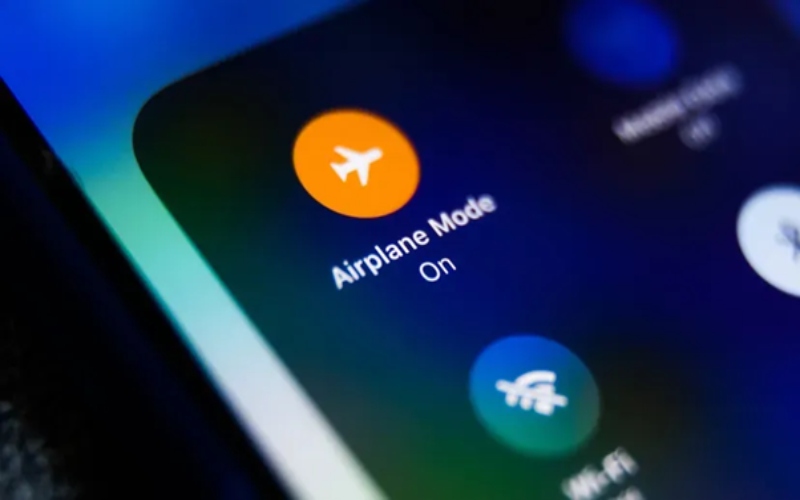
Before we answer the question, why do flight attendants ask passengers to switch their smartphones to Airplane mode? Let’s first define what it is. Sometimes called “flight mode,” airplane mode is a setting on your mobile phone that suspends signals and WiFi while the rest of the device operates as usual.
If you have flown on a commercial flight more than a few times, you will be familiar with the drill. Once the aircraft doors have closed, the flight attendants will instruct passengers to switch their
On an Android mobile phone, go to settings and locate the aircraft icon. When you activate it, your phone is now in airplane mode.
On iPhones, the icon for airplane mode is in the Control Center. You can access the Control center by swiping down from the top right or up from the bottom right.
Once in airplane mode you no longer receive signals from the ground
Once in airplane mode, your phone will stop receiving radio signals, texts, calls, access to webpages, and email. Text messages or other data that has already been downloaded and stored information are still accessible.
The radio altimeter measures the aircraft’s altitude above the terrain by bouncing beams of radio waves to the ground and back and measuring how long the return takes. Photo: Getty Images
Why the science behind why you are required to use airplane mode isn’t easy to explain; the simple answer is that it prevents your phone from interfering with the plane’s electronic communication devices and radio altimeters. The aircraft’s communications and navigational systems utilize radio signals from the ground. These signals a susceptible to interference from mobile phones and tablets as they both use the same frequencies.
Because of this, a mobile phone can inadvertently pick up a signal causing cross-talk or adjacent-channel interference. The easiest way to describe it is when you are listening to the radio in your car and unable to hear the song clearly because the signal from another radio station is interfering with it. Because of safety, pilots need clear communications, and an errant telephone call on your mobile can compromise that.
5G is a worry
Having your phone set to airplane mode is even more critical nowadays as mobile phone providers switch to 5G. With 5G, even though planes fly at over 30,000 feet, the signals generated by ground antennas could interfere with the aircraft’s radio altimeters. During the aircraft’s descent and landing, interference from a mobile device could lead to the pilots not knowing how far they are from the ground.
Airlines do not want 5G antennas placed near airports. Image: T-Mobile
This may now have you wondering how it is OK to have inflight WiFi if the signals can interfere with communication devices and altimeters. The answer is simple: inflight WiFi is provided by satellites, not antennas on the ground.
What happens if you forget to put your mobile phone on airplane mode?
While the chances of you causing the plane to crash are remote, you do not want to chance it. Pilots use radio altimeters in bad weather or poor visibility to know their exact height. The fear is that 5G signals could be picked up by the aircraft’s radio altimeter antenna and interfere with the correct readings. It does not matter if one person of half a dozen people forgot to switch their phones to airplane mode, as one errant signal could lead to a disaster.
