
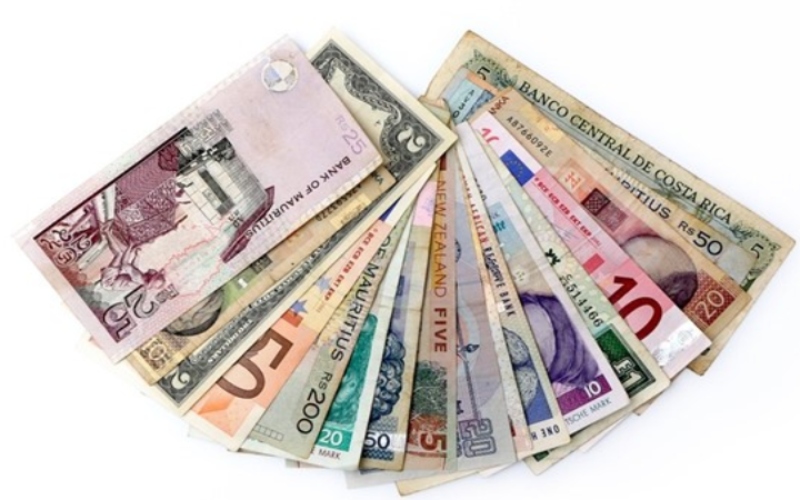
On Monday, the rand broke through R18 to the dollar for the first time since the pandemic-induced madness that took hold in April 2020, and subsided again during May of that year.
That is due in part to dollar strength and various global factors. But the rand is also tanking all by itself; it is the worst-performing currency among its emerging-market peers over the past month, with the government’s inability to deal with load shedding cited as a major reason.
A dollar is now just about 20% more expensive than it was a year ago, in rand terms. And compared to six months ago, every $1,000 you buy will cost just about R4,000 more.
It is not a great time to be planning travel to the United States and places that are tracking the US dollar.
But there are places where a rand is still worth a fair bit of money, as measured against its value a year ago, and other places where the impact is not as bad.
In India, rands are now worth about 8.5% less than a year ago, and roughly the same is true of China’s renminbi.
In Canada, the value erosion has been about 10%.
But for South Africans, the price of a euro is just about flat; a year ago, you would have paid about R17.50 for a euro, now you’ll pay about R17.40. The value of the Swedish krona is likewise flat over the past year, as is the New Zealand dollar.
But three destinations for South Africans – including one of the most popular – stand out as cheaper right now than a year ago, in rand terms. Even if one is only theoretically so.
The UK, thanks to a budget the market hates
The pound hit an all-time low against the dollar this week as its new government said it would cut taxes, then said it would cut taxes more, without any apparent plan to cut spending or boost revenues elsewhere in the short term.
The likelihood of increasing government debt, and a central bank that must increase interest rates to keep already high inflation in check, has some economists worrying about stagflation. That, traditionally, means a choice between rising inflation or rising unemployment, with no winning moves available to those trying to steer the economy.
With South Africa running only the relatively benign risk of not enough electricity, the rand is just about 6% stronger against the pound than it was this time last year.
Japan, because it won’t follow the American example
The rand is about 8% stronger against the yen than it was a year ago, even after Japan’s government stepped in to artificially support its currency for the first time in 24 years last week.
Japan has refused to follow the lead of the US Federal Reserve and hike interest rates, insisting it must keep borrowing money cheap in order to encourage inflation – of which it has had too little for too long.
The growing gap between its interest rates and many other countries, including South Africa, means a weak yen for travellers.
Argentina, on paper – but not really
In constant value terms, spending your rands in Argentina will now get you about 22% farther than it did this time last year.
Unfortunately, the value of the peso has not been constant. In July, data on Monday showed, inflation in Argentina spiked to a 20-year high, and it is now forecast to top out at close to 100% this year.
With dollars fiercely guarded, imports have become difficult, making for trouble with even coffee supplies.
As with Argentina’s previous economic crises, they say you can live like a king in Buenos Aires right now, if you have hard currency. Unfortunately, that will have to be dollars, putting you back at square one.
