
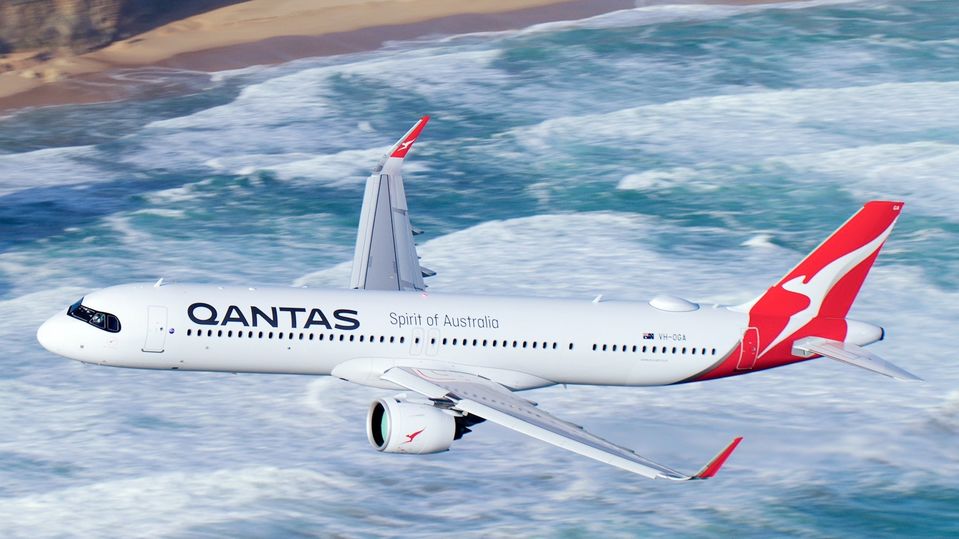
Qantas is closing in on the design of its new Airbus A321XLR business class suites, which will crown a fleet of 16 single-aisle jets darting across Australia and into Asia.
In comparison to the more conventional recliners of its first XLRs, intended for domestic and short-range overseas flights such as New Zealand, these planes will sport fully lie-flat beds, along with HD entertainment screens in every seat.
Qantas International CEO Cam Wallace says airlines now need to work to even earlier lead times when it comes to fitting out new jets.
“What all airlines are seeing is (increased) supply chain complexity,” he tells Executive Traveller.
“What that means for us is we need to provide the aircraft manufacturer and the seat suppliers anything up to 36 months in terms of locking a seat design, getting it approved and authorised, and to the manufacturers.”
Once Qantas lands on its chosen XLR business class suite, samples are built for submission to airline safety regulators.
Assessing the field also involves factors such as the actual price tag of the seat (which easily tops $100,000 per unit), weight (which contributes to fuel burn) and scope for customisation in features and design.
Qantas can shorten and streamline the timetable by selecting a seat which is “already approved, because it’s flying on other aircraft (with other airlines),” Wallace explains.
“They’ve gone through that process, so getting a seat that’s already approved is obviously the lower-risk proposition.”
This doesn’t rule out a fresh design, which could see Qantas listed as its prestigious lunch customer, but this would then need to be tested and approved.
“So it’s a real balance between innovation and risk, and the surety you want in supply,” Wallace says.
Qantas Group CEO Vanessa Hudson says the lie-flat seats will be “well suited for longer domestic sectors like Sydney and Melbourne to Perth, and creating new possibilities for our international network on routes like Perth to India or Adelaide to Singapore.”
“They’ll also provide a more consistent premium experience for customers flying domestically and connecting onto our long-haul international network, like Brisbane-Perth-London. It’s always possible that Qantas could opt for an all-new platform, but as Wallace admits, this seat would need to pass safety regulations before large-scale production could begin, opening up the possibility of undesirable delays in the arrival of the new jets.https://www.executivetraveller.com/news/qantas-airbus-a321xlr-international-business-class
