
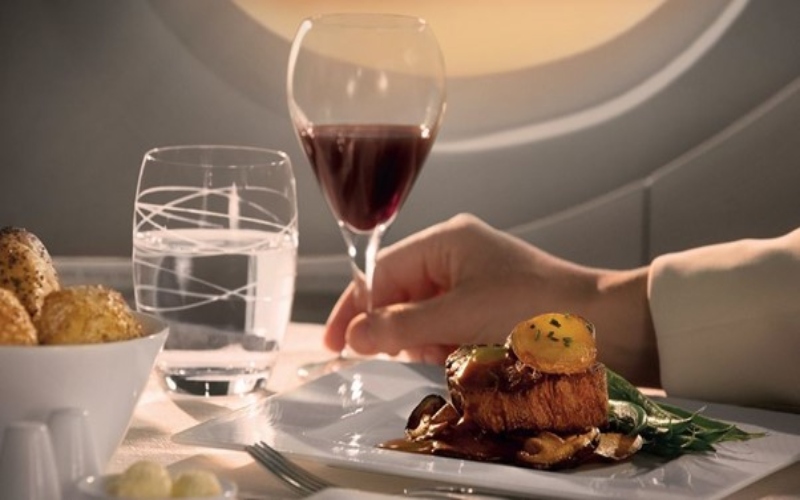
Travelling the world means spending a lot of time on planes. This can be a very good thing for wine lovers, in particular, as it presents an opportunity to sample some of the world’s most exclusive drops at 40,000 feet, rather than only going direct to the source.
One downside of mile high tastings though is the cabin environment is very different to that of your local wine bar, preferred restaurant or dinner table, and the same wine can seemingly taste vastly different on the ground to what it does in the sky.
As is widely known, the drier air and lower air pressure in a plane cabin makes wine aromas and flavours harder to detect. While certainly not a deal breaker, wines often taste simpler in the air.
Climate control
Airlines tend to serve young wines almost exclusively on board their aircraft, and temperature is a big factor influencing the way these wines taste, as varied climate conditions can accentuate different characteristics of wine. It’s much harder to control this in the sky too.
Champagnes and sparkling wines are sometimes served not quite cold enough on planes, making them seem flat or broad.
Conversely, reds tend to be a bit cold, which makes them seem a bit short on flavour and all closed up on the nose. The good thing is these are easily warmed up simply by holding the glass in your hand for a spell – the smaller the glass, the better.
The only thing that can fix warm Champagne is a press of the call button.
With such fierce competition between airlines, a great wine offering really enhances the in-flight experience, so selecting and serving good wine is an important consideration for most airlines.
But tighter profit margins most-pandemic have seen many airlines wield the red pen in the wine cellar, cutting as much of the spend as they can get away with. The exception is first class, where airlines still manage to turn it on when it counts.
First and foremost
For those reclining in first class comfort, a quality Champagne is hard to resist. Expect prestige drops such as Dom Perignon or Krug Grande Cuvée and just stick to these. Nothing else will compare (though a couple of Singapore Airlines’ limited-edition pours may come close).
The downward trend in the price point and grade of wines served in business class cabins has been countered by a steady increase in global wine quality.
Most international and domestic business class wine lists these days feature entry or mid-tier wines of larger, well-known brands. Sadly, smaller boutique wineries are seldom seen, as only the bigger producers have the scale to manage the discounted prices to be on board.
What to choose, and avoid
Other than in first class, the bubbles served in-flight are generally from the mid-to-larger sized houses and of styles delivering punchy, flavourful impact. They’re fit for the job and robust enough to handle cabin conditions; and hey, it’s just fun to raise a glass before take-off.
Ditto for sparkling wines, with airlines tending to favour the consistent producers and selecting a bold style with plenty of flavour. These are generally all good options.
Business class may have less premium wines, but there are still plenty of quality drops to be found.
Business class may have less premium wines, but there are still plenty of quality drops to be found.
In the white department, it’s a good idea to go for wines packing plenty of vibrant fruit, like a punchy young riesling, a fruity sauvignon blanc, lemony semillon or fresh semillon-sauvignon blanc blends. These styles have such irrepressible fruit that they still taste great in the air.
Generally, it’s best to steer clear from your more textural or oak-aged whites, as these wines can be seriously bent out of shape on a plane. Hot tip: leave those styles for drinking in the lounge.
Reds are more complex, and the oak and tannin of full-bodied young red wines can be dialled up by the cabin to a level that makes these styles a bit unapproachable.
Be bold
The finer elements of lighter reds, such as pinot noir, can get a bit lost in the cabin, but there are certainly plenty of places making bold, bright and vibrant fruity pinot that goes well on a plane. You’re looking for freshness and lip-smacking red fruit here, and these are worth seeking out.
Also look to young Cotes-du-Rhone reds and grenache-based blends from places such as Australia, Spain and France. These carry plenty of flavour and are such great all-rounders when it comes to food. They really are ideal in the sky.
Reds can be complex to enjoy inflight, although a Bordeaux is well-suited to sipping above the clouds.
Reds can be complex to enjoy inflight, although a Bordeaux is well-suited to sipping above the clouds.
Sweet wines and fortified wines are great on a plane, as they are so robust and the quality level is generally a step above the whites and reds, because the volumes being sold are much lower. You’ll often find a surprisingly good glass of port or muscat; but indulge sparingly, as these are much higher in alcohol content than table wines and fizz.
All that aside, why not have a glass from wherever you’re headed? Many carriers feature wine from the destination country of the flight and, of course, their home territory. Try these and get the feel for what lies ahead, or have a final taste of what you’re leaving behind.
And of course, don’t overindulge in wine and drink as much water as you can handle. You’ll thank yourself when you arrive.
Source: https://www.executivetraveller.com/guide-best-wines-to-drink-on-planes
