
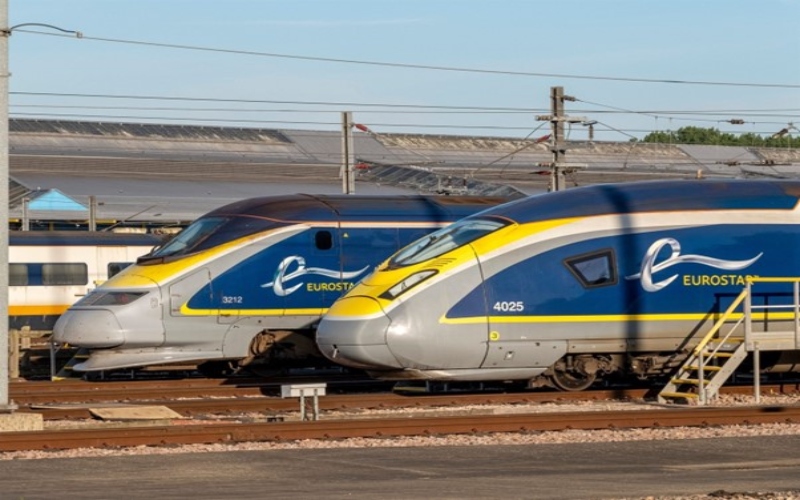
Travellers riding the high-speed rails between London and Europe could soon have a number of train operators, services and routes to choose from.
Eurostar has been the sole operator through the Channel Tunnel since its launch in 1994, and today links London to Paris, Brussels, Amsterdam and a handful of other cities.
But for the first time in decades, that monopoly is under serious threat.
A turning point came this week, when regulators approved the use of London’s Temple Mills depot by new entrants.
Until now, Eurostar’s exclusive access to the depot had effectively blocked rivals from gaining a foothold.
The move clears one of the biggest logistical roadblocks for competition, and could open the floodgates for challengers.
Virgin Trains is already on the starting blocks, having already secured regulatory approval to operate services through the Channel Tunnel.
Having exited the British domestic train market in 2019, the Branson-backed brand is promising a £760 million investment in a fleet of new trains to run between London and Paris as well as Brussels by 2028.
Virgin Trains would follow Virgin’s long-established ‘disruptive’ model in entering a market, with a “customer-first approach” including better onboard service and more flexible ticketing.
Also in the race is Evolyn, a French-Spanish consortium which has already placed an order for 12 high-speed trains (with the option for 16 more) and nominated London-Paris as its first route in 2026-2027.
This is also green fields for startups.
Heuro is a new venture launched by the former CEO of Thalys. Based in the Netherlands and backed by tech investment, Heuro wants to run up to 15 daily services between London and Amsterdam starting in 2028.
The plan includes offering a premium onboard experience with strong tech integration and customer personalisation.
Meanwhile, UK-based startup Gemini Rail plans to offer services from 2028 between London and Paris, and potentially Brussels, with an emphasis on sustainable rail travel.
London-based Midnight Trains, which once aimed at launching a network of overnight luxury sleeper trains positioned as a ‘hotel on rails’, has also hinted at resurrecting its ambitions for services through the Channel Tunnel.
The operator failed to make good on plans for an extensive Paris-based network to the UK, Spain, Italy, Germany and Denmark beginning in 2024.
Although details remain vague, the company recently teased that “London might be on the cards again.”
What does all this mean for passengers? In a word: choice.
Until now, Eurostar’s lack of competition has allowed it to control pricing and schedules with little pressure to innovate.
New entrants will disrupt that balance, spurring better pricing and more competitive products – from lounges to seats and onboard service – along with more flexible booking options and loyalty perks.
Source: https://www.executivetraveller.com/news/eurostar-competition-london-paris-train-rivals
