
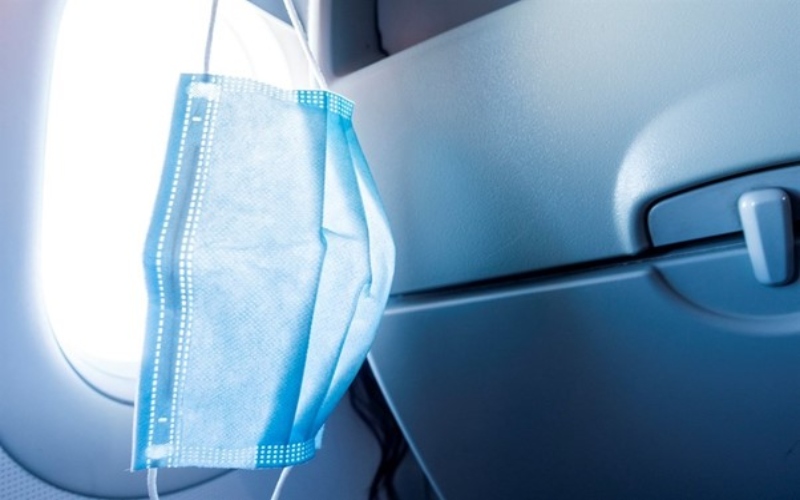
The mask mandate comes into effect on Friday, but inflight meal and beverage services will be allowed to continue.
Just two months after lifting a long-standing mask mandate for airports and aircraft, Brazil has reinstated the policy, but will not go as far as to ban inflight meal service again. Brazil’s health authority ANVISA announced the changes this week, and the mandate will go into effect on Friday, November 25th.
Brazil had previously been strict with COVID restrictions, with its initial mask mandate onboard aircraft lasting almost two years. The governing body previously restricted food consumption while onboard aircraft but is not currently planning to reinstate regulations to that effect. Inflight meal service was the first to return back in May, while the mask mandate was only lifted in August.
The changes follow a meeting on COVID restrictions held by the governing body at which meeting participants stressed that epidemiological data demanded the return of non-pharmacological protective measures, such as the use of masks, mainly in public transport, airports, and in closed or confined environments.
The decision was made by representatives of the Brazilian Society of Infectology; National Council of Health Secretaries – Conass; National Council of Municipal Health Secretariats – Conasems; Oswaldo Cruz Foundation; and the Brazilian Collective Health Association; in addition to epidemiologists Carla Domingues and Wanderson Oliveira. ANVISA Director Alex Campos, who proposed the measure, framed it as a community duty:
“The use of masks in higher risk environments, due to their characteristics of confinement, circulation and agglomeration of people, represents an act of citizenship and protection of the community and aims to mitigate the risk of transmission and contagion of the disease”.
Since August of this year, the continued use of masks has been encouraged, especially for those with flu-like symptoms and for the most vulnerable public, such as immunocompromised people, expectant mothers, and the elderly. This week’s meeting, however, found that in light of the current increase in the number of cases of COVID-19 in the Brazilian population, it has become necessary to resume the mandatory use of face protection masks in airports and aircraft.
The announcement also has to do with the seasonal characteristics of the pandemic. Health authorities have noted over the past years an increase in virus transmission in Brazil between November and January. This increase is expected to be further exacerbated by the rise in travelers flying for school holidays and Christmas.
What kind of masks are allowed?
The new resolution approved by Anvisa goes into effect on Friday. It states that using face masks inside airport terminals, means of transport, and other establishments in the airport area is mandatory. The resolution further specifies that customers cannot use acrylic or plastic masks; masks equipped with exhalation valves (including N95 and PFF2 ones); a face shield alone; or any type of scarf or cloth bandanna.
According to the resolution, masks must be adjusted to the face, covering the nose, chin, and mouth, minimizing spaces that allow the entry or exit of air and respiratory droplets. Travelers can only remove their masks only to drink or eat, both in the airport terminal and onboard the aircraft. This rule includes ground transportation such as busses to and from the aircraft.
The Agency confirmed that in-flight services on domestic flights could continue per its earlier decision which reinstated meal and beverage services on domestic flights. The mandate can be waived for those with disabilities that prevent them from properly using face protection masks and for children under three years old.
Source: https://simpleflying.com/brazil-reinstates-mask-mandate-flights-airports/
